
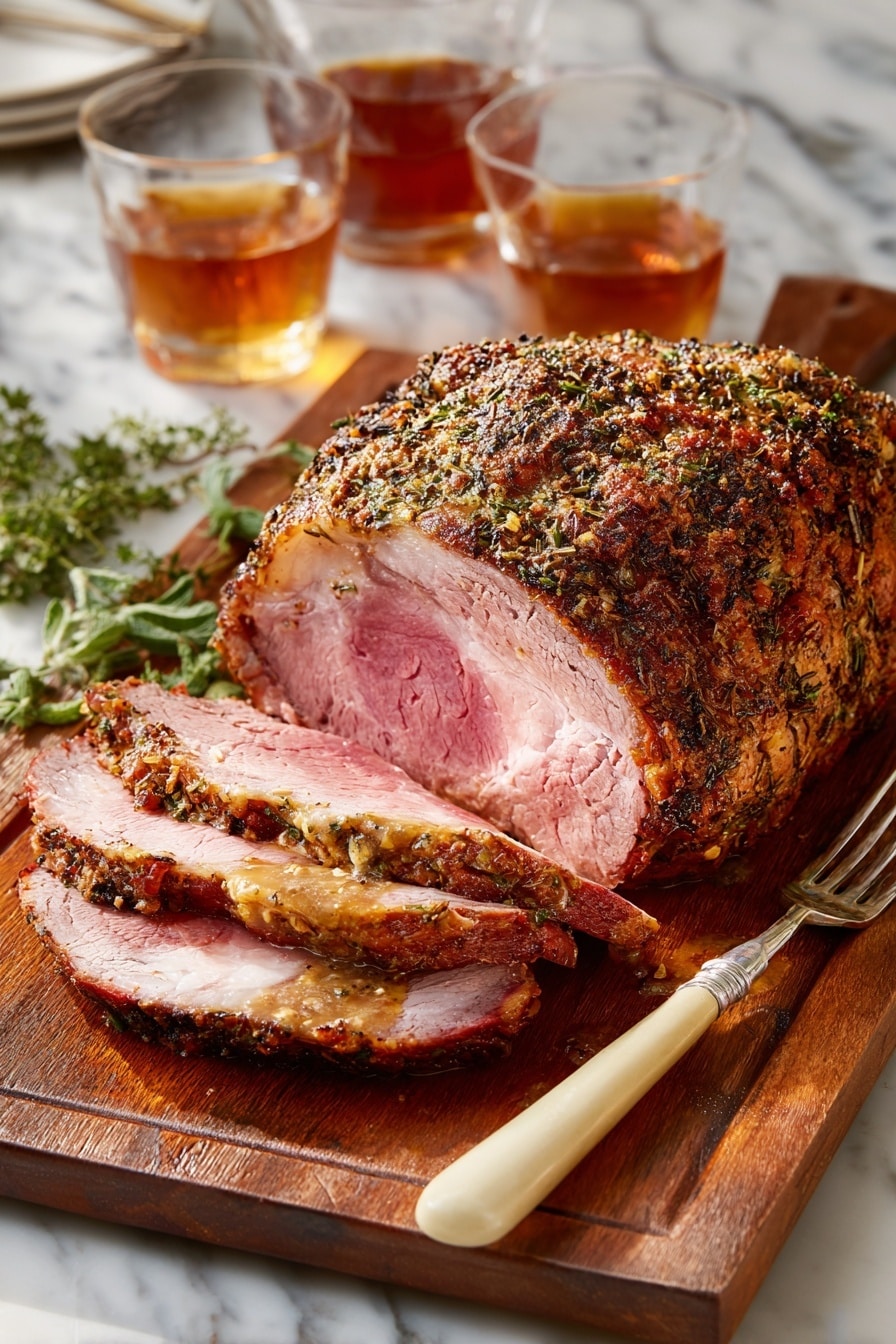
If you’re looking for an unforgettable centerpiece for your next special meal, this Garlic Herb Butter Prime Rib Recipe is absolutely the way to go. I absolutely love how this roast turns out—juicy, tender, and bursting with fragrant garlic and fresh herbs, all wrapped up in a rich butter crust. Whether you’re serving up a holiday feast or just want to impress guests on a weekend, this recipe delivers that wow factor every single time. Stick around—I’ll share my best tips to make it foolproof so you get perfect prime rib, no stress.
Why You’ll Love This Recipe
- Rich Garlic Herb Flavor: The butter infused with garlic, rosemary, thyme, and shallots brings your roast to a whole new level of savory deliciousness.
- Perfectly Juicy Inside: Letting the roast come to room temperature and seasoning it with salt ahead of time makes sure the meat stays tender and flavorful.
- Foolproof Cooking Method: The initial high-heat sear locks in flavor, then slow roasting to the perfect temp gives you consistent results every time.
- Perfect for Entertaining: This roast not only tastes incredible but also serves up beautifully for a crowd–your guests will go crazy for it.

Ingredients You’ll Need
This recipe balances fresh herbs and aromatic garlic with rich butter that coats the prime rib beautifully—each ingredient plays its part to elevate this classic roast to a show-stopping meal. When you shop, look for fresh rosemary and thyme if you can; they really brighten the butter.
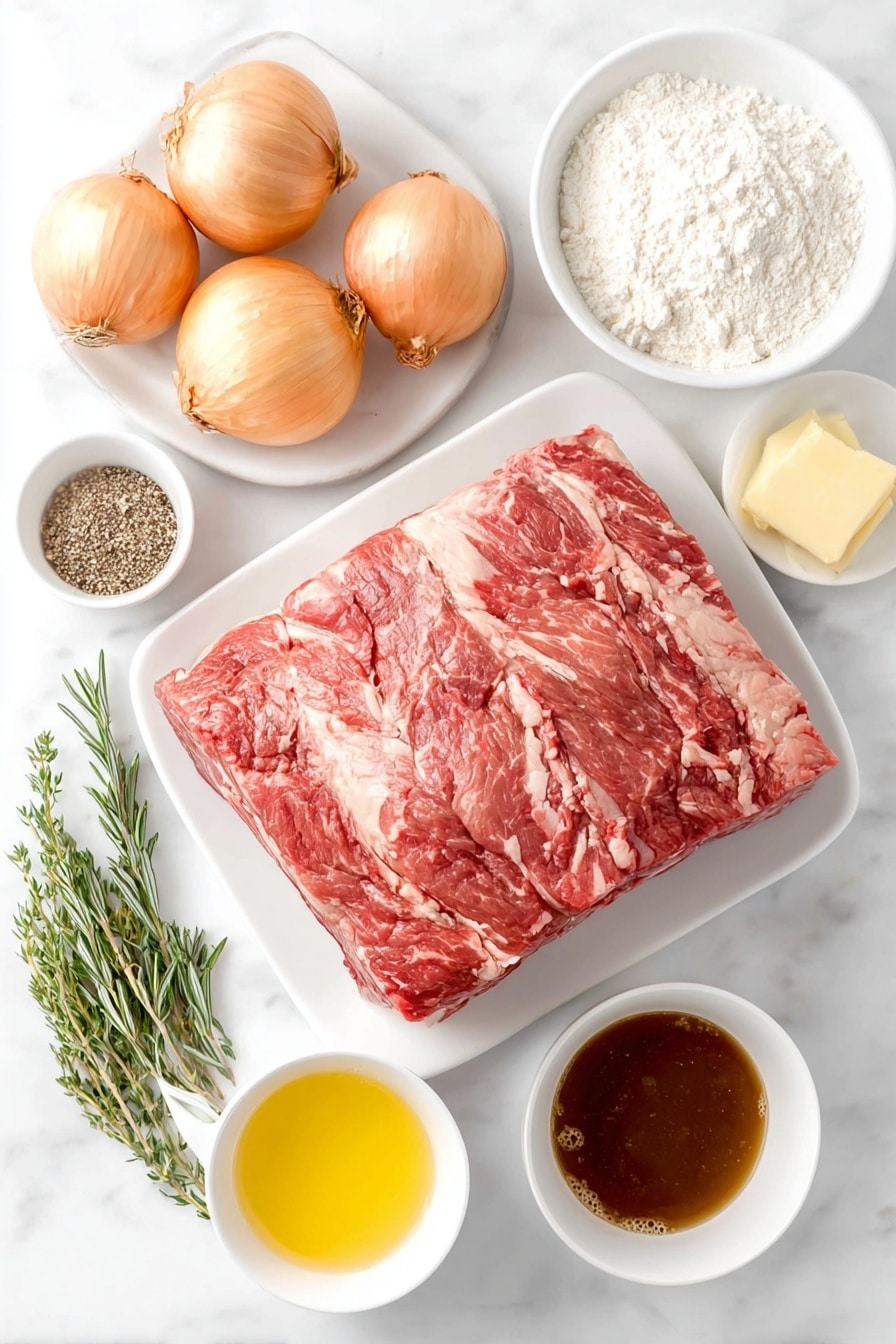
- Boneless prime rib roast: Look for a roast with good marbling for the richest flavor and juiciest texture.
- Salt: Essential for dry brining and drawing out moisture for a better crust on the roast.
- Unsalted butter: Softened to mix easily with herbs and garlic, making a smooth, spreadable compound butter.
- Garlic cloves: Fresh and minced finely for that punchy, aromatic hit.
- Shallot: Adds a subtle sweetness and depth that complements garlic perfectly.
- Dried thyme: Earthy and slightly minty, dried thyme packs concentrated flavor into the butter.
- Fresh rosemary: Bright and piney, freshly minced rosemary makes all the difference in aroma.
- Ground pepper: Adds a subtle heat and rounds out the seasoning.
- Kosher salt: For seasoning the butter and balancing flavors.
- Lemon juice: A splash of acidity to cut through richness and lift the taste.
- All-purpose flour or cornstarch: For making a luscious gravy from the pan drippings.
- Prime rib fat drippings: Flavor-packed base for the gravy—a little goes a long way.
- Beef stock or water: To thin out the gravy and enhance the meatiness.
Variations
Sometimes I like to tweak this Garlic Herb Butter Prime Rib Recipe depending on the season or guests’ preferences—there’s plenty of room to customize, and I encourage you to make it your own!
- Variation: Swap out rosemary for fresh sage if you want a slightly earthier herb flavor—I’ve tried it and it’s fantastic with the garlic butter.
- Variation: For a spicy kick, add a pinch of cayenne pepper or smoked paprika into the butter mixture; just a little goes a long way.
- Variation: Use clarified butter instead of regular unsalted butter for a cleaner, higher-heat roast crust—I did this once and got an even crisper exterior.
- Variation: To make it keto-friendly, simply avoid the flour in the gravy; thicken with xanthan gum or reduce the juices instead.
How to Make Garlic Herb Butter Prime Rib Recipe
Step 1: Prepare Your Roast with Salt and Room Temperature Rest
Start by rubbing the whole prime rib roast with half a tablespoon of salt, making sure every nook and cranny is covered. Then, set it on a platter and let it sit at room temperature for about an hour. I learned this trick years ago when I wanted a better crust on my roast—the salt draws out moisture while resting, which means when it hits the pan, you get beautiful browning rather than steaming. Plus, bringing the meat to room temp helps the butter spread more smoothly later on.
Step 2: Mix Your Garlic Herb Butter
In a small bowl, combine your softened butter with the minced garlic, shallot, dried thyme, fresh rosemary, ground pepper, kosher salt, and a splash of lemon juice. Give everything a good mix until combined. This butter is your flavor powerhouse—don’t hold back with seasoning here. When I first tried making the butter a little bland, the roast ended up underwhelming, so I always go for a bold mix now. This butter will also season the pan drippings later, so be generous and leave it out at room temp for easy spreading.
Step 3: Get Your Oven Ready for a Hot Start
Preheat your oven to 500°F (or the highest setting if your oven maxes out lower than that). Place your roasting pan on a rack in the center of the oven ahead of time—the goal is to have the pan super hot so it licks the bottom of the roast when you place it inside, creating an instant sear. Trust me, this step amps up the flavor like nothing else.
Step 4: Tie and Butter Your Roast
Take the roast out once it’s been sitting and pat it dry with paper towels. Flip it fat side down to start and tie the roast with kitchen string about 4 or 5 times, spaced evenly. This helps keep the shape nice and tight for even cooking. Then, flip it fat side up and rub every inch thoroughly with your garlic herb butter. If the roast is still cold, the butter might clump—that’s totally fine! You can even pile some on top to melt over as it cooks. When I’m in a hurry, I’ve done exactly this and found the flavor still shines through perfectly.
Step 5: Sear High and Roast Low
Remove the hot pan from the oven and carefully place your buttered prime rib fat side up inside. This will sear the bottom slightly and add caramelized flavor. If you have an oven-safe digital thermometer, insert it into the center of the roast now for precise monitoring. Pop it into the oven at 500°F for exactly 30 minutes—this high heat jumpstarts browning and locks in juices.
After 30 minutes, reduce the oven temperature to 325°F and continue roasting until the internal temperature hits about 115°F for rare or 120°F for medium-rare. You’ll see the roast start to take on that inviting deep brown color and the aroma will fill your kitchen. I usually start checking 15 minutes before I expect it to be done to avoid overcooking—prime rib is best enjoyed pink and juicy!
Step 6: Rest Before Carving
Once the roast reaches your target temperature, take it out and place it on a cutting board. Loosely cover it with foil and let it rest for 15 to 20 minutes. This resting time allows the juices to redistribute and the internal temp will rise another 5 to 10 degrees naturally. I learned the hard way that cutting too soon causes all those flavorful juices to spill out, so resting is absolutely key.
Step 7: Make the Gravy
Save about 1/2 cup of the fat in your roasting pan—those brown bits stuck to the bottom are packed with flavor. If there’s more than 3/4 cup, scoop some out and discard. Set the pan on medium heat on your stove. Sprinkle the flour (or cornstarch) over the fat and whisk for a minute or two to cook out any raw taste. Don’t worry if it looks chunky. Scrape up all those flavorful brown bits while whisking—this is the magic that transforms simple drippings into rich gravy.
Next, gradually whisk in the beef stock or water until your gravy thickens, about a minute. If it’s too thick, just add more stock or water to reach your desired consistency. Finish with a pinch of salt or pepper to taste. I usually make a double batch of this gravy because it’s so good, and everyone ends up going back for seconds!
Step 8: Carve and Serve
After the roast has rested for a full 30 minutes total, cut and remove the kitchen strings. Slice the prime rib against the grain into hearty 3/4-inch slices—this thickness keeps every bite tender and juicy. Don’t try to skimp here! Serving these thick, juicy slices is just as much a part of the experience as the rich garlic herb butter itself.
Pro Tips for Making Garlic Herb Butter Prime Rib Recipe
- Room Temperature Rest: Bringing the roast out ahead of time really sets you up for even cooking and better searing.
- Don’t Skimp on Butter: The garlic herb butter not only flavors the meat but also enriches the drippings for a killer gravy.
- Use a Meat Thermometer: It helps you hit the perfect doneness every time without guessing or cutting into the roast prematurely.
- Always Rest Your Roast: Slicing too soon causes tough, dry meat—patience will reward you with juicy, tender slices.
How to Serve Garlic Herb Butter Prime Rib Recipe
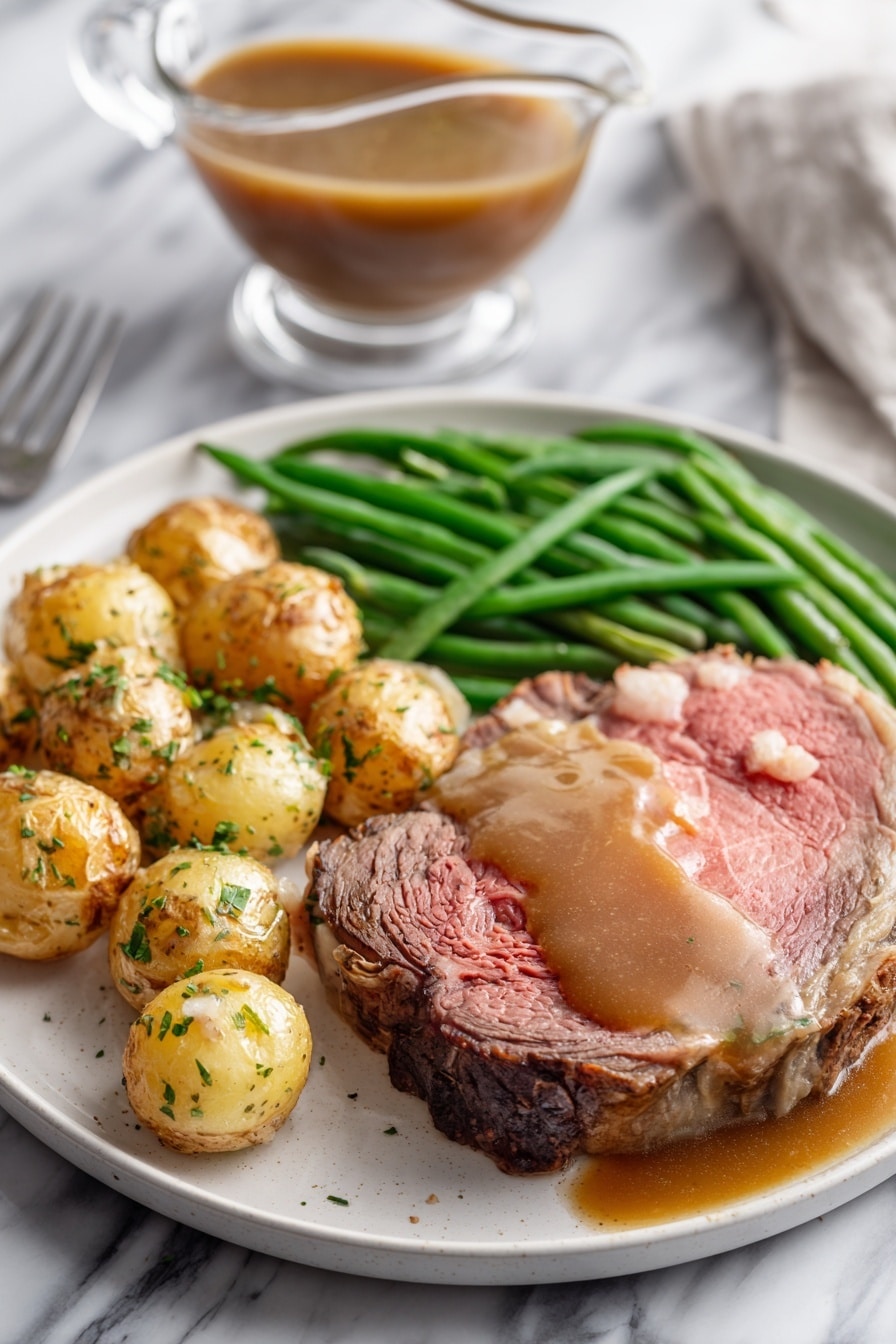
Garnishes
I like to finish this roast with a light sprinkle of flaky sea salt and freshly ground black pepper right before serving to enhance the crust’s flavor. Sometimes, a handful of chopped fresh parsley adds a pretty, fresh pop of green and aroma on the plate. Trust me, these little touches make a big difference in presentation and taste.
Side Dishes
This prime rib goes perfectly with creamy mashed potatoes or roasted root vegetables to keep things classic. I also love serving it alongside garlic sautéed green beans or a crisp arugula salad to cut through the richness. For holidays, fluffy Yorkshire puddings or a cheesy gratin are crowd-pleasers that pair beautifully.
Creative Ways to Present
For a special occasion, I once arranged the sliced roast on a large wooden board surrounded by roasted garlic cloves, fresh herb sprigs, and small bowls of gravy and horseradish sauce. It felt rustic and inviting, like a fancy butcher’s spread at home. Another time, I served it plated with a drizzle of the herb butter gravy and garnished with edible flowers for a vibrant, festive look.
Make Ahead and Storage
Storing Leftovers
I usually wrap leftover prime rib tightly in foil or plastic wrap and keep it in an airtight container in the fridge. It stays incredibly moist for up to four days. When you reheat, slice it thinly and use low heat—this roast deserves to be enjoyed more than once!
Freezing
If you want to freeze leftover prime rib, wrap individual slices tightly in plastic wrap and place in a freezer-safe bag. It freezes well for up to three months. I recommend freezing in portions so you only defrost what you’ll eat; this helps maintain texture and flavor.
Reheating
To reheat, warm slices gently in a 250°F oven wrapped in foil for about 10-15 minutes or until warmed through. You can also reheat gently in a skillet with a splash of beef stock to keep the meat juicy. Avoid microwaving if possible—it tends to dry out prime rib quickly.
FAQs
-
Can I use a bone-in prime rib roast for this recipe?
Absolutely! Bone-in prime rib will add extra flavor and can help keep the meat juicy during cooking. Just allow a bit more time for roasting since bones affect heat distribution. The garlic herb butter rub works just as beautifully on bone-in roasts.
-
How do I know when the prime rib is done?
The most reliable way is to use an instant-read or probe thermometer. For rare, remove at 115°F and for medium-rare, at 120°F internal temperature—remember, it will continue to cook and rise slightly as it rests.
-
Can I prepare the garlic herb butter in advance?
Yes! You can mix the butter and herbs a day ahead and keep it covered in the fridge. Bring it to room temperature before rubbing it onto the roast for easy spreading.
-
What if I don’t have fresh herbs?
Dried herbs work in a pinch! Use about half the amount since dried herbs are more concentrated. I usually keep dried thyme on hand and it still tastes great, but fresh rosemary adds a lovely brightness.
-
How do I make the perfect gravy from the drippings?
Reserve some fat from the roasting pan, whisk in flour to cook out the raw taste, and then add beef stock gradually, scraping up those browned bits from the pan. This combo creates a deeply flavorful gravy that’s the perfect complement to your prime rib.
Final Thoughts
This Garlic Herb Butter Prime Rib Recipe has become such a special one in my kitchen—it’s the dish that turns any meal into a celebration and gets everyone excited before the first bite. It’s full of rich, comforting flavors but with a fresh herb twist that feels both elegant and homey. I hope you give it a try and enjoy the process as much as the delicious results. Trust me, once your family or friends taste this roast, it’ll quickly become a beloved classic in your repertoire.
Print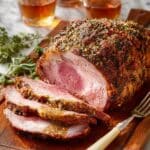
Garlic Herb Butter Prime Rib Recipe
- Prep Time: 95 minutes
- Cook Time: 120 minutes
- Total Time: 215 minutes
- Yield: 11 servings
- Category: Main Course
- Method: Roasting
- Cuisine: American
Description
This Garlic Herb Butter Prime Rib recipe features a succulent 8-pound boneless prime rib roast, richly seasoned with a garlic, thyme, rosemary, and shallot butter. The roast is seared at high heat for a beautifully browned crust, then slow-roasted to perfection for a tender, juicy interior. Finished with a flavorful pan gravy made from the dripping, this dish is ideal for holiday celebrations or special occasions.
Ingredients
Prime Rib
- 8 pound boneless prime rib roast
- 1/2 tablespoon salt
- 1 1/2 teaspoons kosher salt
- 1 1/2 tablespoons ground pepper
- 1/2 cup all-purpose flour or cornstarch
- Salt, to taste
Garlic Herb Butter
- 12 tablespoons (6 ounces; 1 1/2 sticks) unsalted butter, softened
- 10 large garlic cloves, minced
- 1 shallot (slightly larger than a golf ball), minced
- 1 1/2 tablespoons dried thyme
- 1 1/2 tablespoons minced fresh rosemary
- 1 1/2 teaspoons lemon juice
Gravy
- 1/2 cup fat prime rib roast drippings
- 4 cups beef stock or water
Instructions
- Prepare the Prime Rib: Rub the entire prime rib with 1/2 tablespoon salt and set on a platter at room temperature for one hour. This step draws out excess moisture for better browning and allows the roast surface to come to room temperature.
- Make Garlic Herb Butter: In a small bowl, combine softened butter, minced garlic, minced shallot, dried thyme, fresh rosemary, ground pepper, kosher salt, and lemon juice. Mix thoroughly until well combined. Leave at room temperature.
- Preheat Oven and Prepare Roasting Pan: Heat the oven to 500°F or the highest setting below 500°F. Place the roasting pan on a rack in the center of the oven to get hot, which will sear the roast when placed inside.
- Prepare and Tie the Roast: After the roast has been sitting out for an hour, pat it dry with a paper towel. Place it fat side down and tie with kitchen string into 4 to 5 sections spaced about two inches apart. This ensures even shape and cooking.
- Apply Herb Butter: Rub the entire prime rib with the garlic herb butter, using all the butter to season the meat and flavor the drippings. Begin with the fat side up. If the butter clumps while spreading, that’s okay, just apply as evenly as possible.
- Sear the Roast: Remove the hot roasting pan from the oven and set on a heatproof surface. Place the prime rib in the pan fat side up so the bottom sears slightly. Insert an oven-safe thermometer probe into the center if available.
- Initial High-Temperature Roast: Place the roast in the preheated oven and cook at 500°F for 30 minutes, which will create a deep brown crust.
- Continue Roasting at Lower Temperature: Reduce oven temperature to 325°F. Continue roasting until internal temperature reaches 115°F for rare or 120°F for medium-rare.
- Rest the Roast: Remove the prime rib from the oven and place it on a cutting board. Loosely cover with foil and let rest for 15 to 20 minutes. The internal temperature will rise by 5°F to 10°F due to residual heat.
- Make Pan Gravy: Keep about 1/2 cup fat and as many brown bits in the roasting pan. If there is more than 3/4 cup fat, remove the excess. Place the pan on the stovetop over medium heat. Sprinkle the flour over the fat and whisk for 1-2 minutes to cook out raw flour taste. Scrape the browned bits from the pan and incorporate into the mixture. Increase heat to medium-high, whisk in beef stock or water, and cook until thickened, about a minute. Adjust seasoning with salt and pepper.
- Carve and Serve: After resting for 30 minutes, cut and remove kitchen strings. Slice roast against the grain into 3/4-inch thick slices. Serve with the prepared pan gravy.
Notes
- Enhance the flavor and sophistication of your holiday prime rib by using garlic, thyme, rosemary, and shallot butter for a rich herb-kissed profile.
Nutrition
- Serving Size: 1 slice
- Calories: 1317 kcal
- Sugar: 1 g
- Sodium: 899 mg
- Fat: 105 g
- Saturated Fat: 45 g
- Unsaturated Fat: 60 g
- Trans Fat: 0 g
- Carbohydrates: 9 g
- Fiber: 1 g
- Protein: 80 g
- Cholesterol: 316 mg