

If you’re looking for a vibrant, tangy, and utterly irresistible dish, this Eggplant Caponata Recipe is exactly what you need in your kitchen rotation. I absolutely love how this Sicilian-inspired sweet-and-sour stew combines tender roasted eggplant with zesty capers and golden raisins, creating a flavor profile that’s both complex and comforting. Whether you’re serving it as a snack with crostini or as a side dish, this recipe will have your family and friends asking for more.
Why You’ll Love This Recipe
- Layered Flavors: The combination of sweet raisins, tangy vinegar, and savory eggplant creates an addictively balanced taste.
- Versatile Serving: You can enjoy it chilled, at room temperature, or warmed, making it perfect for any occasion.
- Simple Ingredients: No fancy or hard-to-find items here—just fresh veggies and pantry staples you probably already have.
- Make-Ahead Friendly: It tastes even better the next day, which means effortless prep for busy weeks or entertaining.

Ingredients You’ll Need
This recipe is truly a celebration of fresh produce and bold pantry staples working in harmony. Pay close attention to quality here—the better your olive oil and fresh veggies, the more vibrant your caponata will be.
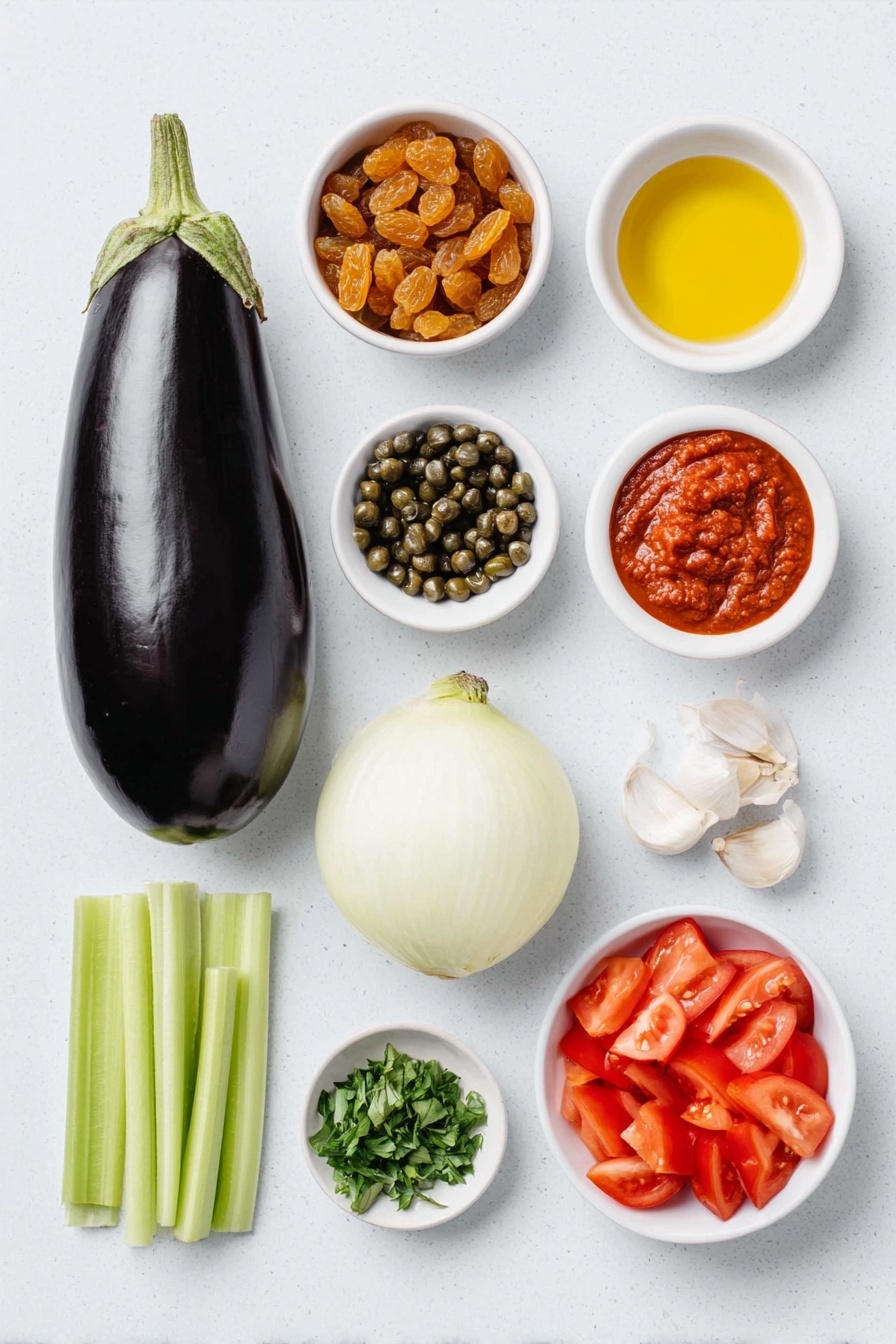
- Roasted eggplant: I always roast mine to get that lovely smoky sweetness and soft texture, which is key to great caponata.
- Golden raisins: These add a perfect burst of natural sweetness and tender chewiness after soaking.
- Sherry vinegar: It brings acidity and depth; if you don’t have sherry vinegar, a mild red wine vinegar would work.
- Capers: Salt-packed, rinsed well—they add that classic briny pop you don’t want to skip.
- Extra-virgin olive oil: Use a good quality one to enhance the richness of the vegetables.
- Yellow onion: Adds sweetness when cooked low and slow.
- Celery stalk: Gives crunch and subtle freshness to the stew.
- Red bell pepper: Offers a nice contrast of sweetness and color.
- Sea salt: Essential to balance and bring out the flavors.
- Tomato paste: Concentrates the tomato flavor and helps thicken the sauce.
- Garlic cloves: Grated or finely minced for pungency evenly distributed through the caponata.
- Fresh tomatoes: Choose ripe and juicy ones for natural sweetness and acidity.
- Cane sugar: Just a touch, to balance the acidity perfectly.
- Fresh parsley: Chopped for brightness and herbaceous freshness.
- Freshly ground black pepper: Adds a little bite and complexity.
- Fresh basil leaves: For garnish—its sweet fragrance lifts the entire dish.
- Crostini: To serve alongside, perfect for scooping up every last bit.
Variations
I love making this Eggplant Caponata Recipe my own depending on the season and who I’m cooking for—don’t be afraid to experiment a little to suit your tastes!
- Spicy Kick: Adding a pinch of red pepper flakes gave this dish a lively heat that my husband loved; just a little goes a long way.
- Vegan Twist: This recipe is naturally vegan and gluten-free, but you can serve it over quinoa or polenta for a more substantial meal.
- Nutty Touch: Toasted pine nuts sprinkled on top add a lovely crunch and richness that my family raves about during holidays.
- Seasonal Swaps: Swap red pepper for yellow or orange peppers for a milder sweetness, or toss in some chopped olives for extra brininess.
How to Make Eggplant Caponata Recipe
Step 1: Roast your eggplant to tender perfection
This step sets the foundation for your caponata. I usually slice the eggplant into thick rounds or cubes, toss with a bit of olive oil, salt, and roast at 400°F (200°C) until golden and completely tender—about 30-40 minutes. Roasting not only softens the eggplant but also deepens its flavor, giving you that melt-in-your-mouth texture that’s essential for caponata.
Step 2: Soften the golden raisins while you prep
In a small bowl, combine your golden raisins, sherry vinegar, and capers. Letting the raisins soak softens them nicely and allows them to absorb the tangy vinegar flavor. I found this step really enhances the overall taste since the raisins don’t feel dry or out of place in the dish.
Step 3: Build the aromatic vegetable base
Heat your extra-virgin olive oil in a large skillet over medium heat, then add the chopped onion and diced celery. Cooking these slowly for about 8 minutes brings out their sweetness and softens them just right. Then add the diced red bell pepper and sea salt, cooking for another 8 minutes until everything is tender but still vibrant. Don’t rush this part; the gentle simmering builds the depth of flavor caponata is known for.
Step 4: Add the tomato paste, garlic, tomatoes & sugar
Stir in the tomato paste, grated garlic, fresh diced tomatoes, and cane sugar. Cook this mixture for about 8 minutes, stirring often to prevent sticking. You’ll notice the tomatoes breaking down into a lovely sauce that coats the vegetables. This step binds all the flavors together, balancing sweetness with the acidity of tomatoes and vinegar.
Step 5: Combine roasted eggplant and soaked raisins & finish with herbs
Now, add in your roasted eggplant, softened raisins with their vinegar and caper mixture, and several grinds of black pepper. Cook everything together for about 5 minutes to let the flavors meld. Finally, stir in the chopped parsley and adjust salt and pepper to taste. The fresh herbs at the end brighten the whole dish beautifully.
Step 6: Cool, chill, and serve with fresh basil and crostini
Allow your caponata to cool to room temperature before refrigerating. Here’s what I learned: the flavors develop even more if you let it sit overnight. My family actually loves it best on days 2 and 3 after the ingredients have had time to mingle. When you’re ready to serve, garnish generously with fresh basil leaves and pile it on crunchy crostini for a winning appetizer or side.
Pro Tips for Making Eggplant Caponata Recipe
- Don’t Skip Roasting the Eggplant: Roasting adds a caramelized depth you can’t get with just sautéing—it’s worth the extra step.
- Soak the Raisins in Vinegar: This is a game changer—softened raisins become plump and tangy, blending seamlessly.
- Cook Low and Slow: Patience during the sautéing phases gives you rich, mellowed flavors that define great caponata.
- Taste and Adjust Seasonings: Since vinegar and sweetness can vary, tasting as you go ensures perfect balance every time.
How to Serve Eggplant Caponata Recipe
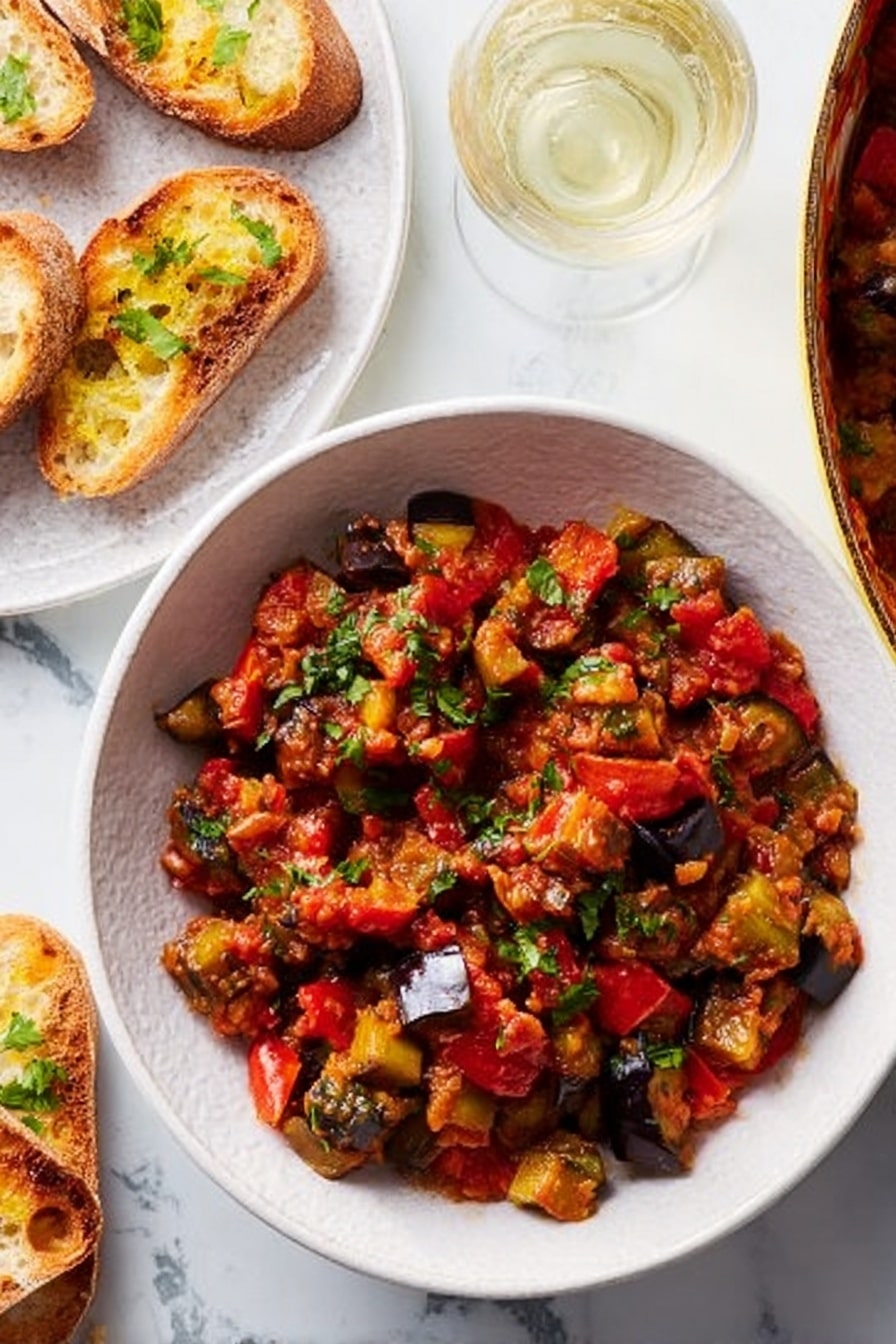
Garnishes
I love topping my caponata with fresh basil leaves to add a burst of herbal aroma and color just before serving. Sometimes I add a few toasted pine nuts or a drizzle of extra virgin olive oil for a little richness. A sprinkle of freshly cracked black pepper right on top also elevates the dish beautifully.
Side Dishes
My favorite way to serve this Eggplant Caponata Recipe is with warm crostini—perfect for scooping. It also complements grilled meats, roasted chicken, or alongside creamy polenta for a cozy vegetarian meal. On hot summer days, a crisp green salad paired with this caponata makes an easy, light lunch.
Creative Ways to Present
For parties, I like serving caponata in small glass jars or mini bowls with a crostini standing upright—it looks inviting and lets guests easily enjoy it without a mess. Another fun idea is layering it as part of an antipasto platter with olives, cheeses, and cured meats for a colorful, shareable spread.
Make Ahead and Storage
Storing Leftovers
I store leftover caponata in an airtight container in the fridge, where it keeps beautifully for up to 5 days. I always remind myself to give it at least a few hours to chill so the flavors meld and intensify—best served cold or at room temperature.
Freezing
While I haven’t personally frozen this recipe often, it does freeze quite well if you have extra. Just cool completely, pack into a freezer-safe container, and thaw overnight in the fridge. I recommend reheating gently to preserve the texture and flavors.
Reheating
To reheat, I use a skillet over low heat, stirring often so nothing sticks or dries out. You can also microwave it gently, but I prefer stovetop for a more even warmth. Keep in mind caponata is delicious even cold, so you have flexibility depending on your mood.
FAQs
-
What is the best way to roast eggplant for caponata?
Roast eggplant at 400°F (200°C) for about 30-40 minutes until tender and golden, either cubed or sliced. Toss it lightly with olive oil and salt beforehand to enhance flavor and texture. Roasting helps develop a smoky, caramelized taste that’s essential for a delicious caponata.
-
Can I make Eggplant Caponata Recipe ahead of time?
Absolutely! In fact, caponata tastes better after sitting for a few hours or overnight because the flavors have time to meld. Store it in an airtight container in the fridge for up to 5 days and enjoy it chilled or at room temperature.
-
Is this recipe vegan and gluten-free?
Yes! This Eggplant Caponata Recipe is naturally vegan and gluten-free, making it a great option for many dietary preferences. Just be sure to serve with gluten-free crostini or crackers if needed.
-
What can I serve with eggplant caponata?
Caponata is wonderfully versatile—serve it as a topping for crostini, alongside grilled meats or fish, with roasted chicken, over creamy polenta, or as part of an antipasto board with cheeses and olives.
-
Can I substitute any ingredients in the caponata?
Sure! You can swap sherry vinegar with red wine or apple cider vinegar, or use different colored bell peppers for variety. Adding olives or toasted nuts can also give new dimensions to the dish. Just keep the balance of sweet, sour, and salty in mind.
Final Thoughts
This Eggplant Caponata Recipe holds a special place in my kitchen — it’s one of those dishes that feels hearty, fresh, and elegant all at once. The fact that it’s made from simple, wholesome ingredients and tastes even better the next day means it’s a total winner for busy cooks and entertaining alike. I can’t recommend giving this flavorful stew a try enough—you’ll be charmed by how easy it is, and your taste buds will thank you!
Print
Eggplant Caponata Recipe
- Prep Time: 15 min
- Cook Time: 60 min
- Total Time: 75 min
- Yield: 6 to 8 servings
- Category: Appetizer
- Method: Stovetop
- Cuisine: Sicilian, Italian
- Diet: Vegetarian
Description
Eggplant Caponata is a vibrant Sicilian sweet and sour stew made with roasted eggplant, tomatoes, bell peppers, capers, and golden raisins simmered together to create a rich, flavorful appetizer or side dish. Best served chilled or at room temperature on crostini and garnished with fresh basil, this dish perfectly balances tangy, sweet, and savory notes for a refreshing summer treat.
Ingredients
Base Ingredients
- 1 recipe Roasted Eggplant
- ½ medium yellow onion, chopped
- 1 celery stalk, diced
- 1 red bell pepper, stemmed, seeded, and diced
- 1 pound tomatoes (about 4 medium), cored and diced
Flavorings & Add-ins
- 3 tablespoons golden raisins
- 3 tablespoons sherry vinegar
- 2 tablespoons capers
- 2 tablespoons extra-virgin olive oil
- ½ teaspoon sea salt
- 1 tablespoon tomato paste
- 3 garlic cloves, grated
- ½ teaspoon cane sugar
- ¼ cup chopped fresh parsley
- Freshly ground black pepper, to taste
To Serve
- Fresh basil leaves (for garnish)
- Crostini
Instructions
- Roast the Eggplant: Begin by roasting the eggplant as per the referenced recipe until it is tender and caramelized. Set it aside to cool slightly.
- Soften Raisins: In a small bowl, mix the golden raisins with sherry vinegar and capers, letting them soak while you prepare the vegetable base, allowing the raisins to plump and absorb flavors.
- Sauté Aromatics: Heat the extra-virgin olive oil in a large skillet over medium heat. Add the chopped onion and diced celery, cooking for 8 minutes until the vegetables soften and become fragrant.
- Add Bell Pepper and Season: Stir in the diced red bell pepper and sea salt, cooking for another 8 minutes until the pepper softens and melds with the other vegetables.
- Develop Sauce: Add the tomato paste, grated garlic, diced tomatoes, and cane sugar to the skillet. Stir frequently and cook for about 8 minutes until the tomatoes break down and create a thick, saucy consistency.
- Combine Ingredients: Add the roasted eggplant along with the softened raisins, vinegar, and capers mixture to the skillet. Season with freshly ground black pepper, stir well, and cook for an additional 5 minutes to allow flavors to meld.
- Finish and Season: Stir in the chopped fresh parsley and adjust seasoning to taste with salt and pepper as needed.
- Cool and Store: Remove the caponata from heat and let it cool to room temperature. For best flavor, refrigerate and allow the dish to rest for 2–3 days to let the flavors fully develop. Store in an airtight container for up to 5 days.
- Serve: When ready to eat, garnish the caponata with fresh basil leaves and serve alongside crostini for a delightful appetizer or side dish.
Notes
- This caponata recipe is a perfect summer appetizer or side with its sweet and sour Sicilian flavor profile.
- Flavor improves after resting for a couple of days, making it an excellent make-ahead dish.
- Serve chilled or at room temperature to best enjoy the complex flavors.
- Pair with crispy crostini and fresh basil for a classic presentation.
- Can be adapted to be gluten-free naturally by avoiding crostini or serving with gluten-free bread.
Nutrition
- Serving Size: 1/6 of recipe (approx. 150g)
- Calories: 140
- Sugar: 10g
- Sodium: 380mg
- Fat: 7g
- Saturated Fat: 1g
- Unsaturated Fat: 6g
- Trans Fat: 0g
- Carbohydrates: 20g
- Fiber: 5g
- Protein: 3g
- Cholesterol: 0mg