
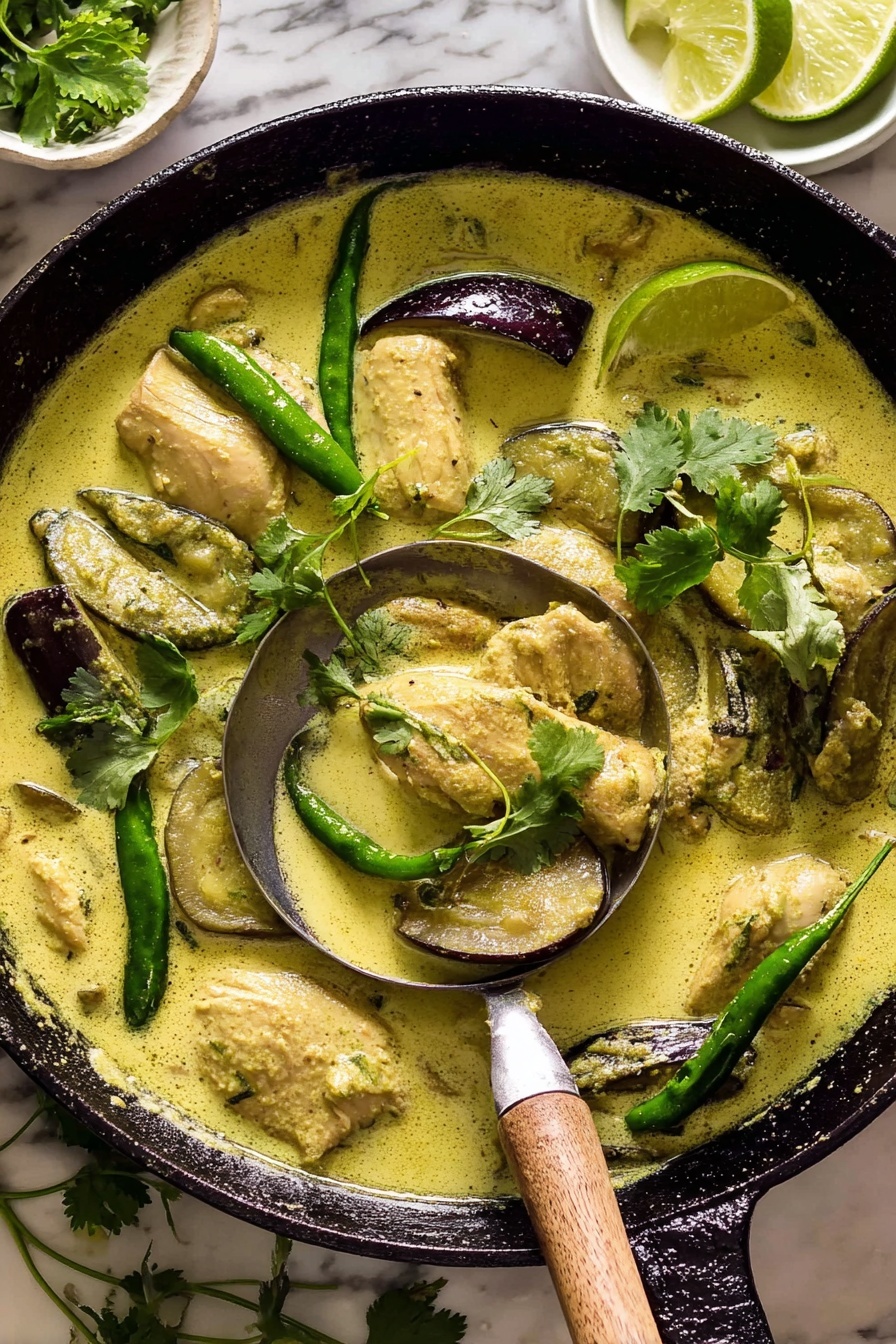
If you’re craving that perfect balance of spicy, creamy, and fresh, I’m excited to share my Authentic Thai Green Curry Recipe that’s absolutely fan-freaking-tastic. Whether you’re new to Thai cooking or a seasoned pro, this recipe will help you nail that vibrant flavor and comforting richness every time. I’ll walk you through each step so your kitchen smells like a street market in Bangkok and your family goes crazy for dinner.
Why You’ll Love This Recipe
- Bursting with Authentic Flavors: The perfect blend of fresh herbs, creamy coconut, and fiery green curry paste makes this dish truly stand out.
- Super Simple to Make: Using store-bought curry paste or homemade, the steps are straightforward and perfect for busy weeknights.
- Customizable Heat Level: You control how spicy you want it, which makes it friendly for all spice preferences.
- Family Favorite Every Time: My loved ones always ask me to make this, so you’ll definitely impress yours too.

Ingredients You’ll Need
These ingredients come together so naturally for a creamy, aromatic curry with layers of fresh spice. I always recommend grabbing the best quality coconut milk and authentic green curry paste (Maesri brand is my go-to!). If you want to try homemade paste, that’s a whole other level of fresh, but store-bought works beautifully for a quick fix.
- Thai Green Curry Paste: Maesri brand delivers consistent quality and heat; otherwise, homemade is more vibrant but requires prep.
- Garlic: Adds that classic pungent kick—always fresh and minced finely for even flavor distribution.
- Fresh Ginger: Essential for warmth and a touch of zing, use freshly grated.
- Lemongrass Paste: Concentrated lemongrass flavor that brightens the curry without the fibrous texture.
- Vegetable Oil: Neutral oil perfect for sautéing the paste without overpowering flavors.
- Chicken or Vegetable Broth: Keeps the curry rich and savory; low sodium lets you control saltiness.
- Coconut Milk: Full-fat is a must to get that silky, luscious sauce.
- Fish Sauce: Adds umami depth—adjust amount carefully to suit taste.
- White Sugar: Balances the heat and acidity; you’ll find the perfect sweet spot by tasting.
- Salt: A pinch enhances all the other flavors without overwhelming.
- Kaffir Lime Leaves: Bring a citrusy aroma that’s signature to this curry.
- Chicken Thighs: Tender, juicy, and perfect for absorbing curry flavors.
- Japanese Eggplants: Small and tender, they cook quickly and absorb the sauce beautifully.
- Snow Peas: Add freshness and a slight crunch at the end of cooking.
- Thai Basil Leaves: I use them fresh at the last minute for that herbal lift.
- Lime Juice: Brightens the whole dish at the finish.
- Crispy Fried Asian Shallots: Totally optional but adds amazing texture and flavor—highly recommended!
- Thai Basil or Cilantro/Coriander: Fresh herbs for garnish add color and aroma.
- Green or Red Chili Slices: For extra heat and visual appeal if desired.
- Steamed Jasmine Rice: The perfect fluffy base to soak up that delicious sauce.
Variations
I love that this Authentic Thai Green Curry Recipe is such a flexible dish—you can personalize it to suit your cravings or dietary needs without losing that core taste we all adore.
- Vegetarian Version: Swap chicken for firm tofu or mixed vegetables like bell peppers and zucchini; just add vegetable broth instead of chicken.
- Seafood Twist: Try shrimp or firm white fish for a lighter protein option that cooks fast and absorbs flavors easily.
- Extra Creamy: For a richer sauce, add more coconut milk or a splash of coconut cream.
- Heat Level Adjustment: I usually start with 4 tablespoons of curry paste and add more if I want it spicier—remember green curry is meant to bite!
How to Make Authentic Thai Green Curry Recipe
Step 1: Sauté the Curry Paste to Unlock Flavors
Start by heating your vegetable oil in a heavy-based skillet or pot over medium-high heat. Add the Thai green curry paste along with minced garlic, freshly grated ginger, and lemongrass paste if you’re using extras. Stir it around for 2 to 3 minutes until the paste mostly “dries out” and deepens in color. Trust me, this step is crucial—you’re blooming the spices and aromatics, meaning you get that depth of flavor that store jars alone don’t deliver. Just a heads-up, the smell can be quite intense, so maybe don’t take a big sniff right over the pan!
Step 2: Add Liquids and Seasonings
Pour in your chicken or vegetable broth followed by the full-fat coconut milk. Stir gently to dissolve the curry paste into the sauce. Now, depending on your paste (store-bought or homemade), start with the recommended amounts of fish sauce, sugar, and salt. I usually add 1 teaspoon each for fish sauce and sugar when I’m using a jarred paste, but if you made the paste yourself, you’ll want to bump those up to 3 teaspoons fish sauce, 3 teaspoons sugar, and a pinch of salt. Toss in the kaffir lime leaves, stir, and bring the mixture to a gentle simmer.
Step 3: Cook the Chicken and Vegetables
Add the sliced chicken thighs to your simmering curry sauce and stir to coat. Lower the heat to medium so the curry bubbles gently, and let the chicken cook through for about 7 minutes. Then add your sliced Japanese eggplants, cooking for another 5 minutes until they’re tender and silky. This timing really helps the eggplants soak up that heavenly curry without turning mushy.
Step 4: Finish with Snow Peas, Herbs, and Lime
Last but not least, toss in the snow peas and cook for just 2 minutes—keeping them slightly crisp adds a wonderful texture contrast. Then stir in the fresh Thai basil leaves and squeeze in the juice of half a lime. The sauce should be slightly reduced but still thin—not thick like a stew—that’s the hallmark of an authentic green curry. Avoid over-simmering here to keep that vibrant green color and fresh flavor.
Step 5: Serve and Garnish
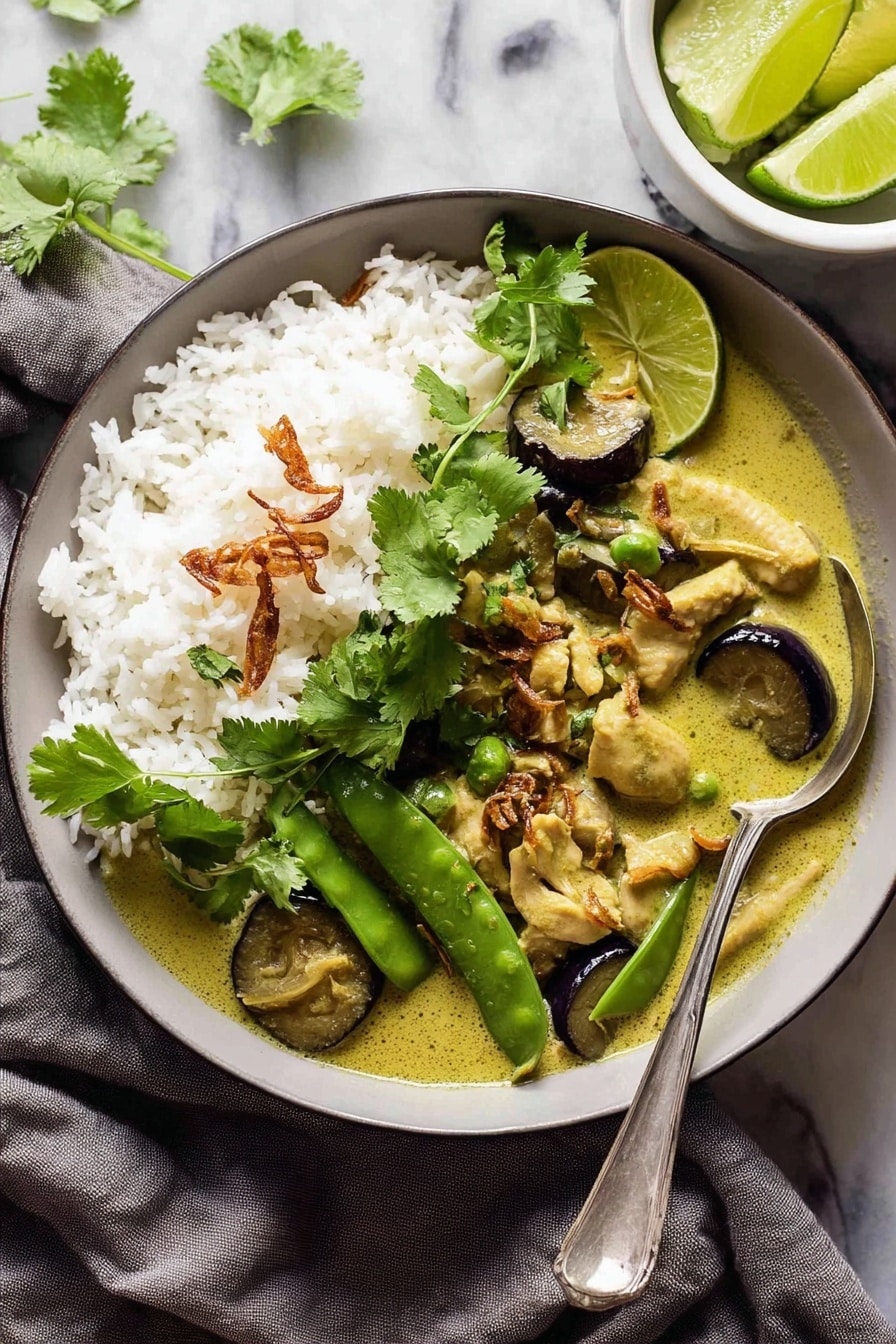
Spoon your green curry generously over steaming jasmine rice and sprinkle with crispy fried Asian shallots and extra Thai basil or cilantro. For a little extra heat or color, throw on some thinly sliced green or red chilies. Sit back and enjoy the layers of flavor you just created!
Pro Tips for Making Authentic Thai Green Curry Recipe
- Bloom the Curry Paste: Frying the curry paste until fragrant unlocks its full potential, so don’t rush this step like I did the first time!
- Adjust Seasonings Gradually: Add fish sauce and sugar in small increments, tasting as you go, so the balance suits your palate perfectly.
- Use Full-Fat Coconut Milk: It makes a world of difference in creaminess and richness, trust me—it’s worth it.
- Don’t Overcook the Veggies: Keep snow peas crisp and eggplants tender but not mushy for the best texture contrast.
How to Serve Authentic Thai Green Curry Recipe
Garnishes
My go-to garnishes are crispy fried Asian shallots—they add that irresistible crunch and extra umami. Thai basil leaves are a must for that sweet, anise-like aroma, but if you want a twist, fresh cilantro works great too. And if you like it fiery, a few slices of fresh green or red chili on top never hurt anyone!
Side Dishes
I usually keep it simple with fragrant jasmine rice that soaks up the curry sauce perfectly. For a little extra veggie love, serve with a light cucumber salad or steamed greens like bok choy or Chinese broccoli dressed with a splash of soy sauce and garlic.
Creative Ways to Present
For a special dinner party, I love serving this curry in individual coconut shells or pretty bowls, garnished with edible flowers and fresh herbs. It’s a real conversation starter that makes your guests feel like they’re dining at a Thai street cafe but in your own home.
Make Ahead and Storage
Storing Leftovers
Leftover green curry keeps beautifully in an airtight container in the fridge for up to 3 days. I recommend storing the curry separately from the rice to avoid sogginess, and then reheating them together for the freshest taste.
Freezing
I’ve frozen this curry with success—just leave out fresh herbs and lime juice before freezing, and add them when you reheat. Freeze in a freezer-safe container for up to 2 months. Thaw overnight in the fridge before reheating gently on the stove.
Reheating
Reheat leftover curry slowly over medium-low heat, stirring frequently to prevent burning. Add a splash of broth or coconut milk if it looks too thick. Always add fresh herbs and lime juice after reheating to keep the flavors bright and fresh.
FAQs
-
Can I make Authentic Thai Green Curry Recipe vegan?
Absolutely! Use vegetable broth instead of chicken and swap fish sauce for soy sauce or a vegan fish sauce alternative. Make sure your curry paste doesn’t contain shrimp paste, or make your own vegan version.
-
How spicy is Thai green curry?
Green curry is meant to have a noticeable spicy kick, but you can easily adjust it by controlling the amount of curry paste and chili garnishes. Starting with less paste and tasting as you go helps manage heat.
-
Can I use other proteins in this recipe?
Yes! Chicken thighs are traditional for their tenderness, but pork, beef, shrimp, or tofu all work wonderfully. Just adjust cooking times accordingly.
-
What if I can’t find kaffir lime leaves?
If kaffir lime leaves aren’t available, you can substitute with a little extra lime zest and a splash of lime juice, but the flavor won’t be exactly the same. Dried leaves can work, but fresh are always better.
-
Is it okay if my curry sauce is thin?
Yes! Authentic Thai green curry sauce is usually on the thinner side—not thick like Western curry. It should be saucy enough to coat the rice but still pour easily.
Final Thoughts
This Authentic Thai Green Curry Recipe feels like a warm hug in a bowl every time I make it. It’s simple yet packed with flavor, and I love how it brings the family around the table with smiles. I encourage you to give it a go—it’s easier than you think, totally customizable, and delivers that crave-worthy vibrant taste of Thailand right in your own kitchen. Trust me, once you have it, you’ll be making it again and again!
Print
Authentic Thai Green Curry Recipe
- Prep Time: 15 min
- Cook Time: 20 min
- Total Time: 35 min
- Yield: 4 servings
- Category: Main Dish
- Method: Stovetop
- Cuisine: Thai
Description
This authentic Thai Green Curry recipe delivers a vibrant and spicy dish made with green curry paste, chicken, coconut milk, and fresh vegetables. Enhanced by fragrant kaffir lime leaves, Thai basil, and a perfect balance of fish sauce and sugar, it offers a deliciously creamy and aromatic curry to be served over steamed jasmine rice. Whether using a store-bought paste or homemade, frying the paste intensifies the flavors beautifully.
Ingredients
Curry Base
- 4 – 6 tbsp Thai Green Curry Paste (Maesri best) OR homemade green curry paste
- 2 large garlic cloves, minced
- 2 tsp fresh ginger, finely grated
- 1 tbsp lemongrass paste
- 2 tbsp vegetable oil
- 1 cup (250ml) chicken or vegetable broth, low sodium
- 400 g/14 oz coconut milk, full fat
- 1 – 3 tsp fish sauce
- 1 – 3 tsp white sugar
- 1/8 tsp salt
- 6 kaffir lime leaves, torn in half
Main Ingredients
- 350 g/12 oz chicken thigh, skinless boneless, sliced
- 2 Japanese eggplants, small, sliced 1cm thick
- 1 1/2 cups snow peas, small, trimmed
Garnishes & Extras
- 16 Thai basil leaves
- Juice of 1/2 lime
- Crispy fried Asian shallots (highly recommended)
- Thai basil or cilantro/coriander (recommended)
- Green or red chilli slices (optional)
- Steamed jasmine rice (for serving)
Instructions
- Heat Oil and Fry Curry Paste: Heat 2 tablespoons of vegetable oil in a heavy-based skillet or pot over medium-high heat. Add the green curry paste along with minced garlic, grated ginger, and lemongrass paste if using. Cook for 2 to 3 minutes until the paste mostly dries out and becomes aromatic, taking care not to inhale the fumes as they can be strong.
- Add Broth and Coconut Milk: Pour in 1 cup of low-sodium chicken or vegetable broth and 400g of full-fat coconut milk. Stir to dissolve the curry paste evenly into the liquid.
- Season the Curry: If using store-bought curry paste, add 1 teaspoon each of fish sauce and sugar, and no salt. For homemade curry paste, add 3 teaspoons each of fish sauce and sugar, and 1/8 teaspoon salt. Stir in 6 torn kaffir lime leaves and mix well.
- Simmer with Chicken: Bring the curry to a gentle simmer then add the sliced chicken thighs. Lower heat to medium to maintain a gentle bubbling and cook for 7 minutes, allowing the chicken to cook through and absorb the curry flavors.
- Add Eggplants: Add the sliced Japanese eggplants to the curry and continue cooking for 5 minutes until they soften but maintain some texture.
- Taste and Adjust Seasoning: Taste the curry sauce and adjust by adding more fish sauce or salt for saltiness or sugar for sweetness, according to preference.
- Add Snow Peas and Final Ingredients: Stir in the trimmed snow peas and cook for 2 minutes until slightly softened. Remove from heat, then stir in 16 Thai basil leaves and juice of half a lime. The sauce should reduce slightly but remain thin and vibrant. Avoid further simmering to prevent darkening of the sauce.
- Serve: Serve the hot green curry over steamed jasmine rice, garnished with crispy fried Asian shallots, extra Thai basil or cilantro, and chilli slices if desired.
Notes
- This recipe offers a quick and flavorful green curry by enhancing store-bought curry paste or using homemade paste for more authenticity.
- Frying the curry paste intensifies its flavor and aroma, which is essential for a great curry.
- Green curry is meant to be spicy; adjust the amount of curry paste accordingly to your heat tolerance.
- Kaffir lime leaves add a crucial fragrant citrus note, so do not skip them if possible.
- Use full-fat coconut milk for the best rich and creamy texture.
- Adding crispy fried Asian shallots as a garnish adds a lovely crunchy texture contrast and flavor boost.
Nutrition
- Serving Size: 1 serving
- Calories: 352 kcal
- Sugar: 7 g
- Sodium: 54 mg
- Fat: 31 g
- Saturated Fat: 25 g
- Unsaturated Fat: 6 g
- Trans Fat: 0 g
- Carbohydrates: 16 g
- Fiber: 5 g
- Protein: 7 g
- Cholesterol: 35 mg