

If you’re craving a comforting, hearty meal that’s bursting with flavor and super easy to whip up, you’ve got to try this Thai Peanut Cauliflower Chickpea Curry Recipe. I absolutely love how this curry blends creamy peanut butter with fragrant coconut milk and spicy red curry paste, all while packing in wholesome veggies and protein-packed chickpeas. Whether you’re new to curry or a seasoned fan, you’ll find that this dish is just as satisfying as it is simple, making it a total weeknight dinner winner.
Why You’ll Love This Recipe
- Simple One-Pan Cooking: Everything comes together in one skillet, which means less cleanup and more time to enjoy your meal.
- Vibrant, Balanced Flavors: The combo of peanut butter, coconut milk, and curry spice creates a rich yet fresh taste that will have you hooked.
- Flexible and Nourishing: Packed with veggies and plant-based protein, this recipe is perfect for vegetarians and anyone seeking wholesome comfort food.
- Quick & Weeknight Friendly: Ready in 30 minutes, it’s perfect for busy evenings when you want something hearty without the fuss.

Ingredients You’ll Need
All the ingredients in this Thai Peanut Cauliflower Chickpea Curry Recipe come together perfectly to create a creamy, slightly spicy curry that feels indulgent but is totally wholesome. A heads up: grabbing fresh produce and finding a good quality red curry paste really makes a difference here.

- Coconut oil: Adds a subtle tropical richness and helps sauté the veggies beautifully.
- Garlic: Minced for that essential aromatic base flavor.
- Fresh ginger: Just freshly grated—it gives the curry its bright, zesty lift.
- Carrot: Thin slices cook quickly and add sweetness and texture.
- Cauliflower: Broken into florets—this hearty veggie soaks up all the flavors wonderfully.
- Green onions: Diced for a mild, fresh onion flavor inside the curry and for garnish later.
- Lite coconut milk: Provides that creamy, luscious base without being too heavy.
- Water or vegetarian broth: Helps thin out the curry to your preferred consistency.
- Red curry paste: This is your flavor powerhouse—look for one with authentic Thai spices.
- Natural creamy peanut butter (or cashew butter): Adds that signature nutty creaminess that makes this curry stand out.
- Gluten-free soy sauce or coconut aminos: For a bit of umami saltiness without gluten.
- Ground turmeric: Adds warmth and a lovely golden color.
- Cayenne pepper: For your preferred level of heat—feel free to adjust!
- Salt: Enhances all the flavors.
- Red pepper (bell): Julienned for sweetness and crunch.
- Chickpeas: Your trusty plant-based protein, rinsed and ready to go.
- Frozen peas: Stirred in at the end to add a pop of color and sweetness.
Variations
I love tinker with variations on this Thai Peanut Cauliflower Chickpea Curry Recipe depending on what I have on hand or what my family is craving. This recipe is so forgiving and adaptable, you’ll definitely want to make it your own!
- Extra Veggies: I often throw in chopped spinach or kale towards the end for extra greens—it adds freshness and boosts nutrients effortlessly.
- Protein Option: You can swap chickpeas for tofu cubes or even cooked chicken if you’re not vegetarian—works like a charm!
- Heat Level: Feel free to dial up the cayenne or add sliced fresh chili peppers if you like a spicy kick, just like my family does.
- Nut Butters: Tried cashew butter instead of peanut butter once and it gave a slightly sweeter, creamier twist that was lovely.
How to Make Thai Peanut Cauliflower Chickpea Curry Recipe
Step 1: Build Your Flavor Base
Start by heating the coconut oil in a large, deep skillet or pot over medium-high heat. Once shimmering, toss in the minced garlic and freshly grated ginger—cook them just for about 30 seconds until fragrant. This quick step wakes up the smell and sets the tone for the whole curry.
Step 2: Sauté Your Veggies
Add the diced green onions, carrot slices, and cauliflower florets to the skillet. Sauté everything together for 3 to 5 minutes, stirring occasionally, until the cauliflower starts to get a nice golden edge and the onions soften. This caramelization adds natural sweetness and depth.
Step 3: Bring on the Coconut and Curry
Pour in the lite coconut milk, along with the water or vegetable broth, then stir in the red curry paste and peanut butter until everything is smooth and combined. Add the gluten-free soy sauce or coconut aminos, turmeric, cayenne pepper, and salt. Give it all a good stir—right away you’ll see how the sauce thickens and gets creamy.
Step 4: Simmer With Veggies and Chickpeas
Next, stir in the julienned red pepper and rinsed chickpeas. Lower the heat to medium-low and let the curry simmer gently for about 10 minutes. This lets all those flavors marry beautifully, and the chickpeas soak up that rich sauce. Don’t forget to taste and tweak seasoning—sometimes a pinch more salt or cayenne can elevate the dish.
Step 5: Finish With Frozen Peas and Garnish
Just before serving, stir in the frozen peas and let them warm through for about a minute. The peas add that sweet pop and fresh color that makes the dish pop on the plate. Serve hot, garnished with fresh cilantro, chopped green onions, and a sprinkle of chopped peanuts or cashews for that irresistible crunch.
Pro Tips for Making Thai Peanut Cauliflower Chickpea Curry Recipe
- Toast Your Peanuts: Toasting your garnish nuts lightly in a dry pan before chopping adds a deeper nutty aroma that’s a game changer.
- Use Fresh Spice Pastes: Fresh red curry paste makes a noticeable difference over jarred versions, giving a brighter, fresher spice profile.
- Don’t Rush the Sauté: Taking time to lightly brown the cauliflower and carrots improves flavor dramatically.
- Adjust Thickness: If the curry is too thick, add a splash more broth or water until it’s your desired consistency—curried sauces should be saucy, not dry.
How to Serve Thai Peanut Cauliflower Chickpea Curry Recipe

Garnishes
I personally love topping my curry with fresh cilantro and extra green onion slices for a burst of freshness, plus a handful of chopped roasted peanuts or cashews for texture. It brings that authentic Thai flair right to your bowl and balances the creamy sauce with a satisfying crunch.
Side Dishes
My go-to pairing is fluffy brown rice or nutty quinoa—both soak up the curry sauce so well and add a wholesome base. Sometimes I serve it with steamed jasmine rice for that fragrant, comforting combo. For a lighter option, a side salad with fresh lime dressing works beautifully.
Creative Ways to Present
For special occasions, I like serving this curry in individual coconut bowls or small cast-iron skillets to keep things warm and pretty. Garnishing with edible flowers or extra chopped herbs also makes it feel like a restaurant-quality dish you whipped up in your own kitchen!
Make Ahead and Storage
Storing Leftovers
This curry holds up beautifully in the fridge for up to 4 days. I store leftovers in airtight containers, and it tastes even better the next day once the flavors have had time to mingle. Just give it a good stir before reheating.
Freezing
I’ve frozen this curry countless times with great success. Portion it into freezer-safe containers and thaw overnight in the fridge before reheating. The veggies might soften a bit more, but the flavor remains fantastic.
Reheating
To reheat, I prefer warming the curry gently on the stove over low heat, adding a splash of water or broth if needed to loosen the sauce. Microwave works too—just cover and heat in short bursts, stirring to distribute heat evenly.
FAQs
-
Can I make this Thai Peanut Cauliflower Chickpea Curry Recipe gluten-free?
Absolutely! Just be sure to use gluten-free soy sauce or coconut aminos as a substitute, and choose a red curry paste that doesn’t contain any hidden gluten ingredients. The rest of the recipe is naturally gluten-free.
-
Is this recipe suitable for vegans?
Yes, it’s completely vegan! The creamy texture comes from coconut milk and peanut butter, and there’s no animal products involved. Just double-check your curry paste and soy sauce labels to confirm no fish sauce or animal-derived ingredients are included.
-
Can I use dry chickpeas instead of canned?
You can, but make sure to soak and cook them fully before adding them to the curry. Using canned chickpeas is just a convenient shortcut that saves time without sacrificing the recipe’s overall texture or flavor.
-
How spicy is this curry, and can I adjust the heat?
This curry has a mild to moderate heat thanks to the cayenne pepper and red curry paste. If you want it milder, reduce or omit the cayenne. For more heat, add extra cayenne or fresh chili peppers. This recipe is super flexible to how you like your spice!
Final Thoughts
This Thai Peanut Cauliflower Chickpea Curry Recipe has become one of my absolute favorites to make on busy nights—it’s quick, comforting, and packed with flavor. I love how it feels cozy yet fresh, and how every spoonful brings together creamy, spicy, and nutty notes. If you want to impress your taste buds and enjoy a wholesome meal that’s easy to make, this curry is just what you need. Trust me, once you try it, it’ll find a permanent spot on your dinner rotation.
Print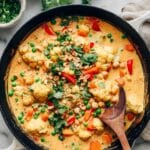
Thai Peanut Cauliflower Chickpea Curry Recipe
- Prep Time: 15 minutes
- Cook Time: 15 minutes
- Total Time: 30 minutes
- Yield: 4 servings
- Category: Main Course
- Method: Stovetop
- Cuisine: Thai
- Diet: Vegetarian
Description
This Thai Peanut Coconut Cauliflower Chickpea Curry is a vibrant and cozy plant-based dish packed with bold flavors from red curry paste, creamy peanut butter, and rich coconut milk. Featuring nutrient-dense cauliflower, chickpeas, and colorful vegetables, this one-pan meal comes together in just 30 minutes, making it an ideal choice for a satisfying weekday dinner or a healthy meal prep option.
Ingredients
For the Curry:
- ½ tablespoon coconut oil
- 3 cloves garlic, minced
- 1 tablespoon freshly grated ginger
- 1 large carrot, thinly sliced
- 1 small head cauliflower, broken into florets (3-4 cups)
- 1 bunch green onions, diced
- 1 (15 ounce) can lite coconut milk
- ⅓ cup water or vegetarian broth
- 2 tablespoons red curry paste
- 2 tablespoons natural creamy peanut butter (or cashew butter)
- ½ tablespoon gluten-free soy sauce or coconut aminos
- ½ teaspoon ground turmeric
- ½ teaspoon cayenne pepper, plus more if you like heat
- ½ teaspoon salt
- 1 red pepper, julienned
- 1 (15 ounce) can chickpeas, rinsed and drained
- ½ cup frozen peas
To Garnish:
- Fresh cilantro
- Green onion
- Chopped peanuts or cashews
Instructions
- Heat aromatics: Place a large deep 10-inch skillet or pot over medium-high heat. Add coconut oil, minced garlic, and grated ginger. Cook for 30 seconds until fragrant, taking care not to burn the garlic.
- Sauté vegetables: Add diced green onions, thinly sliced carrot, and cauliflower florets to the skillet. Sauté for 3-5 minutes until the cauliflower begins to soften and develop a slight golden brown color, and the onions become tender.
- Add liquids and spices: Pour in lite coconut milk and water (or vegetarian broth). Stir in red curry paste, peanut butter, gluten-free soy sauce or coconut aminos, cayenne pepper, ground turmeric, and salt. Mix thoroughly to combine all the flavors.
- Add remaining vegetables and chickpeas: Stir in julienned red pepper and the rinsed, drained chickpeas. Reduce heat to medium-low and let the curry simmer gently for 10 minutes to allow flavors to meld.
- Finish with peas and garnish: Stir in frozen peas and simmer for an additional minute until heated through. Serve the curry in bowls or meal prep containers and garnish with fresh cilantro, extra green onions, and chopped peanuts or cashews. Enjoy with brown rice or quinoa for a complete protein-packed meal.
Notes
- This recipe is a nutritious and flavorful vegetarian curry combining plant-based protein and a variety of vibrant vegetables.
- It is a one-pan meal cooked in about 30 minutes, perfect for quick weekday dinners or meal prepping.
- Adjust cayenne pepper to your preferred heat level for a milder or spicier dish.
- Serving the curry with brown rice or quinoa adds whole grains and a complete protein profile.
- Use gluten-free soy sauce or coconut aminos to keep the dish gluten-free.
Nutrition
- Serving Size: 1 serving
- Calories: 343 kcal
- Sugar: 7.4 g
- Sodium: approx. 470 mg
- Fat: 15.2 g
- Saturated Fat: 10 g
- Unsaturated Fat: 4.7 g
- Trans Fat: 0 g
- Carbohydrates: 40.9 g
- Fiber: 9 g
- Protein: 10.6 g
- Cholesterol: 0 mg