

If you’re on the hunt for a vibrant, satisfying meal that’s both wholesome and bursting with flavor, I can’t recommend my Vegan Pad Thai with Veggies and Peanuts Recipe enough. It’s one of those dishes I turn to when I want something quick yet versatile, packed with fresh veggies, and topped off with the perfect crunch of peanuts and an irresistible tangy sauce. You’ll find this recipe super approachable whether you’re a seasoned cook or just starting out, and it never fails to impress anyone at the table!
Why You’ll Love This Recipe
- Vibrant Veggie Packed: You’ll get a colorful mix of fresh veggies that stay crisp and tasty.
- Perfectly Balanced Flavors: Tamarind, maple syrup, and tamari create a tangy-sweet umami punch you’ll keep craving.
- Easy and Quick: It comes together in under 40 minutes, ideal for any busy weeknight.
- Highly Customizable: Add your favorite veggies or spice level to make it your own every time!

Ingredients You’ll Need
All the ingredients here team up to deliver that authentic Pad Thai experience, but with a fresh, plant-based twist. Choosing fresh, crunchy veggies and finding a good-quality tamarind sauce really elevate the final dish.

- Wide rice noodles: Look for fresh or dried noodles; cooking them just right prevents mushiness later.
- Peanut oil: Its high smoke point is perfect for stir-frying and gives a subtle nutty note.
- Spring onions: Their mild onion flavor adds freshness to every bite.
- Garlic cloves: Freshly sliced brings that signature Pad Thai aroma.
- Hot red chilli: Adds just the right amount of heat—adjust based on your spice tolerance.
- Carrots: Shaved into ribbons for texture and sweetness.
- Green beans: Their crunch contrasts beautifully with the noodles.
- Broccoli: Divided into small florets; they soak up sauce nicely.
- Red pepper: Adds color and a mild sweetness.
- Roasted & unsalted peanuts: Crushed for that irresistible finishing crunch.
- Mung bean sprouts: Adds lightness and freshness.
- Fresh coriander: For garnish — a classic herbal lift.
- Tamarind sauce: The heart of Pad Thai’s tang, but be gentle if using concentrated paste.
- Tamari or soy sauce: For salty depth; tamari keeps it gluten-free.
- Vegan fish sauce or more tamari: Adds umami; vegan fish sauce is easier than ever to find now.
- Maple syrup: Provides a natural sweetness balancing the tangy tamarind.
Variations
I love playing around with this Vegan Pad Thai with Veggies and Peanuts Recipe — it’s super flexible, so you can easily swap or add ingredients based on what you have on hand or your personal tastes.
- Add tofu or tempeh: I sometimes pan-fry cubes of tofu for extra protein and texture; it soaks up the sauce beautifully.
- Use different veggies: Snow peas, baby corn, or bok choy make delightful substitutes or additions, especially based on seasonal produce.
- Adjust spiciness: Feeling adventurous? Toss in more chili or some chili flakes to kick up the heat.
- Nut options: If peanuts aren’t your thing, toasted cashews work well too for crunch.
How to Make Vegan Pad Thai with Veggies and Peanuts Recipe
Step 1: Soak & Prepare Your Noodles Just Right
I can’t stress enough how important it is not to overcook your rice noodles here. Follow the packet instructions closely, soaking them in hot water rather than boiling fully. When you cover the pot, don’t just walk away — lift the lid occasionally to stir gently. This trick helps prevent the noodles from getting sticky or clumping together, which is a common frustration. When they’re just pliable but still firm, drain them and set aside. If you want, toss lightly with oil to keep things slick, but I usually find it’s not necessary if you handle them gently.
Step 2: Whip Up Your Sauce & Prep Veggies
Mix the tamarind sauce, tamari, vegan fish sauce or extra tamari, and maple syrup in a small bowl. Here’s a little wisdom I learned: if you’re using store-bought tamarind paste, start with less since it’s quite concentrated – you can always add more later to balance out the sourness. Meanwhile, prep your veggies—slice, shave, and cut them into the sizes that will cook quickly but retain some crunch. This helps keep the final dish vibrant and texturally interesting.
Step 3: Stir-Fry the Aromatics & Veggies Separately
Heat a wok or large skillet on high – you want it hot enough that your oil just begins to smoke. Start by frying the spring onions, garlic, and chili for that fragrant flavor base. Stir constantly to avoid burning the garlic; it should become golden and aromatic within a minute or two.
Once those are fragrant and softened, scoop them onto a plate but leave all the lovely oil behind. Then add more oil and begin cooking your veggies in the order of their cooking time: broccoli first, then green beans, red pepper, and finally the carrot ribbons. This staggered approach lets everything stay crisp yet just tender.
Step 4: Combine and Finish with Sauce and Noodles
Push all the cooked veggies aside and pour the sauce into the empty bottom of the wok. Add the noodles next—they might have stuck together a bit, but don’t worry! The sauce combined with the wok’s heat will loosen them up. Then, toss back the aromatics and veggies, stirring everything constantly so every strand of noodle gets coated with sauce and the veggies are evenly mixed in. Give it a minute or two to warm through thoroughly.
Pro Tips for Making Vegan Pad Thai with Veggies and Peanuts Recipe
- Don’t Rush the Stir-fry: Cooking over high heat but constantly stirring keeps veggies crisp and noodles from turning mushy — patience pays off!
- Balance Your Sauce: I always taste my sauce before adding it to the wok — a pinch more maple syrup or tamarind can make a huge difference for your preferred sweetness or tang.
- Peanut Finishing Touch: Toast your peanuts lightly if store-bought aren’t roasted; fresh aroma is a game changer.
- Avoid Over-soaking Noodles: Overdoing soaking softens noodles too much, so stop when they just start to get tender for best texture.
How to Serve Vegan Pad Thai with Veggies and Peanuts Recipe

Garnishes
I’m a huge fan of finishing the plate with fresh mung bean sprouts and a generous sprinkle of crushed roasted peanuts for crunch. Fresh coriander adds a lovely herbal lift that just brightens the whole dish. Don’t forget to serve it with lime wedges on the side — a good squeeze of lime brightens everything and balances the flavor beautifully.
Side Dishes
My go-to sides with this Vegan Pad Thai with Veggies and Peanuts Recipe are simple — a crisp Asian-inspired cucumber salad or some steamed edamame with a sprinkle of sea salt complement the dish perfectly without overshadowing it.
Creative Ways to Present
For special occasions, I’ve served this pad thai in small lettuce cups or rolled in rice paper for a fun DIY eating experience. It’s also lovely presented with extra crushed peanuts and herbs piled high on top for an irresistible, vibrant look that always gets compliments!
Make Ahead and Storage
Storing Leftovers
When I have leftovers, I store them in an airtight container in the fridge for up to 2 days. The noodles soak up more sauce overnight, so the next day, the flavors are even more intense. Just keep in mind the veggies might soften slightly, but it still tastes great!
Freezing
I’ve tried freezing this Pad Thai and while it’s possible, I prefer to eat it fresh or refrigerated because the noodles tend to lose their texture after thawing. If freezing, separate the sauce and veggies from the noodles for better texture maintenance.
Reheating
To reheat, I gently warm the leftovers in a skillet over medium heat, adding a splash of water or extra tamari to loosen the sauce. This helps revive the texture and keeps it from drying out. Avoid the microwave if you want to keep that lovely stir-fry texture!
FAQs
-
Can I use regular soy sauce instead of tamari in this Vegan Pad Thai with Veggies and Peanuts Recipe?
Absolutely! Regular soy sauce works well if you don’t have tamari. Just note that tamari is gluten-free and a bit less salty, so you might want to adjust the quantity to your taste.
-
Is there a substitute for tamarind sauce if I can’t find it?
Yes! You can make a quick tamarind substitute by mixing lime juice with a little brown sugar and a splash of soy sauce to balance sweet, sour, and salty notes. It won’t be exact but gets close in a pinch.
-
How do you keep the rice noodles from sticking in Vegan Pad Thai with Veggies and Peanuts Recipe?
The key is soaking the noodles properly and stirring occasionally while they soak. Also, stirring constantly when cooking and adding the oil can prevent clumping. If they do stick, gently separate them with chopsticks or tongs while cooking.
-
Can I add protein like tofu to this recipe?
Yes, tofu is a perfect addition! Pan-fry firm tofu cubes until crispy and toss them in with the veggies at the end for a protein boost that soaks up the flavors beautifully.
Final Thoughts
This Vegan Pad Thai with Veggies and Peanuts Recipe has quickly become one of my favorite go-to meals — bright, comforting, and packed with nourishing ingredients. It’s a great dish to make when you want something a bit special but not complicated, and I’m confident once you try it, you’ll love that balance of tangy, sweet, salty, and crunchy. Give it a whirl the next time you’re craving something fresh and flavorful, and I promise it will become a staple in your rotation too!
Print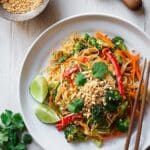
Vegan Pad Thai with Veggies and Peanuts Recipe
- Prep Time: 20 minutes
- Cook Time: 15 minutes
- Total Time: 35 minutes
- Yield: Serves 2-3
- Category: Main Course
- Method: Stovetop
- Cuisine: Thai
- Diet: Gluten Free, Vegan
Description
A vibrant and flavorful vegan Pad Thai recipe featuring wide rice noodles, fresh vegetables, and a tangy tamarind-based sauce. This gluten-free dish is quick to prepare, packed with colorful vegetables, and perfect for a healthy, plant-based meal.
Ingredients
Noodles and Sauces
- 200 g / 7 oz wide rice noodles
- 5 tbsp tamarind sauce
- 1 tbsp tamari / soy sauce
- 2 tbsp vegan fish sauce or more tamari / soy sauce
- 2-3 tbsp maple syrup, adjust to taste
Vegetables
- 2 spring onions, sliced
- 2 garlic cloves, finely sliced
- 1 hot red chilli, finely sliced
- 2 carrots, shaved into ribbons with a speed peeler
- A large handful of green beans, cut diagonally
- ½ small broccoli, divided into florets
- 1 red pepper, finely sliced
- ½ cup mung bean sprouts
Others
- 2 tbsp peanut oil (or other high smoke point oil)
- ¼ cup roasted & unsalted peanuts, pounded in a pestle & mortar
- Fresh coriander, to garnish
Instructions
- Soak the Rice Noodles: Prepare rice noodles according to the packet instructions but undercook slightly. During soaking, lift the lid occasionally to stir and prevent sticking. Stir well halfway through soaking. Drain and set aside. Optionally toss with a little oil to prevent clumping.
- Prepare the Sauce: In a small bowl, mix tamarind sauce, tamari/soy sauce, vegan fish sauce (or additional tamari), and maple syrup. Adjust maple syrup to taste to balance sourness from tamarind.
- Cook Aromatics: Heat a wok or large frying pan over high heat. Add 1 tablespoon peanut oil and heat until nearly smoking. Add sliced spring onions, garlic, and chilli. Stir-fry constantly until spring onions soften and garlic is fragrant. Transfer aromatics to a plate, leaving oil in the pan.
- Stir-Fry Vegetables: Add another tablespoon of oil to the wok. In order, add broccoli florets, green beans, red pepper, and carrot ribbons with 1-2 minutes between additions. Stir-fry vegetables until tender yet still crunchy. Transfer to a plate.
- Combine Noodles and Sauce: Pour the prepared sauce into the wok. Add the drained noodles and toss to coat, breaking apart any clumps with the heat and sauce.
- Reintroduce Aromatics and Vegetables: Return the cooked spring onions, garlic, chilli, and stir-fried vegetables to the wok with the noodles. Mix thoroughly and warm everything together for 1-2 minutes, stirring constantly.
- Serve: Divide the vegan Pad Thai between plates. Garnish with mung bean sprouts, crushed roasted peanuts, and fresh coriander. Serve with lime wedges on the side for squeezing over.
Notes
- Use tamarind paste or homemade tamarind block-based paste for best flavor; shop-bought tamarind puree can be more concentrated, so add cautiously.
- This recipe is naturally gluten-free when using tamari or gluten-free soy sauce.
- Maple syrup can be adjusted for sweetness based on tamarind sourness.
- To ensure noodles don’t stick, stir well during soaking and consider tossing with a bit of oil.
- Vegan fish sauce is a great umami substitute to keep the recipe authentically flavored but can be replaced with extra tamari if unavailable.
Nutrition
- Serving Size: 1 plate (approx. 1/3 recipe)
- Calories: 534
- Sugar: 27.6 g
- Sodium: 1882 mg
- Fat: 15.7 g
- Saturated Fat: 2.6 g
- Unsaturated Fat: 13.1 g
- Trans Fat: 0 g
- Carbohydrates: 88.8 g
- Fiber: 5.7 g
- Protein: 10.6 g
- Cholesterol: 0 mg